
Smart Film Colours for Privacy Glass and Windows
Smart Film is best known for its clear-to-frosted white appearance, but different Smart Film colours and optical configurations can create very different effects on glass. White remains the most versatile choice for privacy, while darker options such as grey and black can suit projects where the glass itself is intended to become part of the design.
Choosing the right Smart Film colour is not simply an aesthetic decision. Privacy requirements, natural light, surrounding finishes, glass construction and the intended use of the room should all be considered.
If you are new to the technology, start with our complete Smart Film guide to learn how PDLC Smart Film works, how it is installed and how it changes glass from transparent to private.
Does Smart Film Come in Different Colours?
Yes. Smart Film can be produced in different colours and optical configurations depending on the product and application. The most familiar option is white PDLC Smart Film, which changes between a more transparent appearance and frosted privacy.
Dark grey, black and specialty coloured Smart Film can create different architectural effects while retaining electronically controlled glass. The best option depends on what the glass needs to accomplish rather than colour alone.
When choosing a Smart Film colour, consider
- Desired privacy level
- Amount of natural light
- Interior design and surrounding finishes
- Residential or commercial use
- Existing glass construction
- Whether the objective is bright privacy, darker privacy or a specialty visual effect
White Smart Film
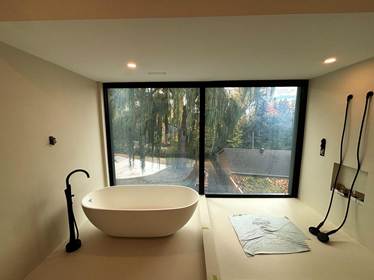
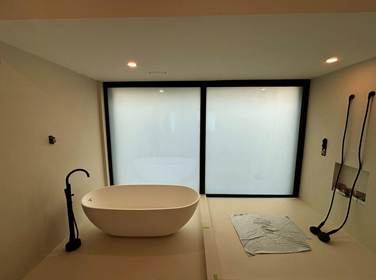
White Smart Film is the standard choice for most switchable privacy applications. In its privacy state, it creates the familiar frosted appearance associated with PDLC Smart Film. When activated, the film becomes substantially more transparent and visually reconnects the spaces on either side of the glass.
Its neutral appearance works well in conference rooms, offices, bathrooms, healthcare spaces, hotels, residential windows and glass doors. White Smart Film is particularly useful when privacy is required without making the room feel unnecessarily dark.
For most residential and commercial privacy projects, white is the logical starting point because it works with a wide range of interiors and preserves a bright architectural appearance.
Black Smart Film
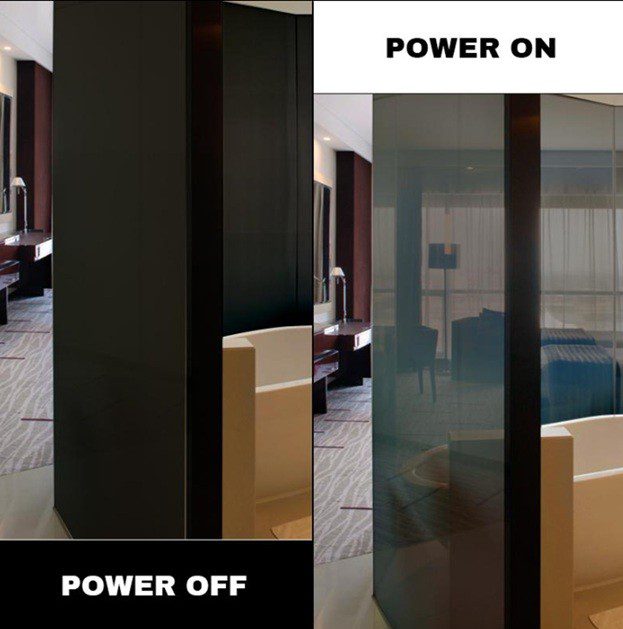
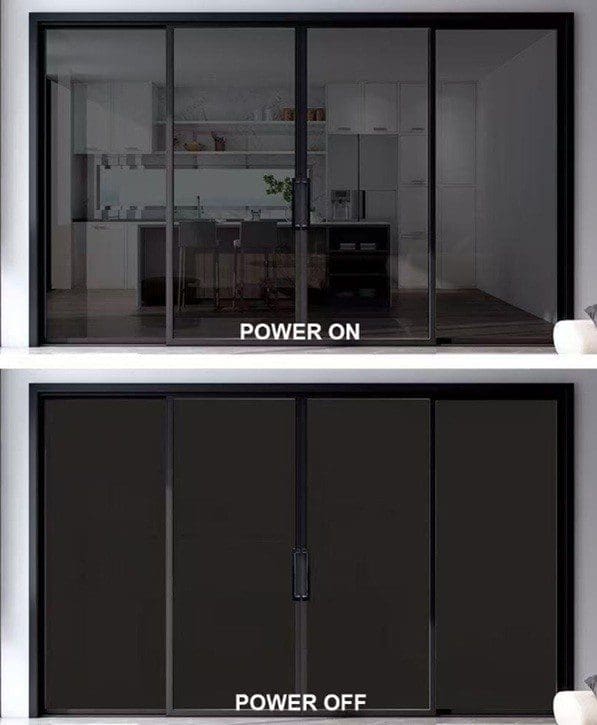
Black Smart Film is intended for projects where a darker appearance is preferred over traditional white privacy glass. It can complement black-framed glass, contemporary interiors, entertainment spaces, luxury residential designs and specialty architectural applications.
It is important to distinguish darkening glass from creating a completely light-proof blackout. Actual light transmission depends on the specific film configuration, glass, installation and lighting conditions. Projects requiring a particular level of darkness should be evaluated using verified product specifications.
For a detailed comparison of Black Smart Film, blackout film, tint, blinds and other methods of darkening glass, visit our dedicated Blackening Windows guide.
Dark Grey and Specialty Smart Film Colours
Dark Grey Smart Film offers a more subdued architectural appearance without the visual intensity of black. It can work particularly well with contemporary offices, hospitality interiors, darker window frames and modern residential designs.
Specialty coloured Smart Film can also be considered for selected architectural, retail, hospitality or branded environments where colour is part of the design concept. Availability can vary by colour, dimensions, quantity and technical requirements, so specialty projects should be reviewed individually.
White vs. Grey vs. Black Smart Film
| White Smart Film | Clear to frosted white | Most privacy applications | Bright, clean, neutral |
| Dark Grey Smart Film | Darker neutral appearance | Contemporary interiors | Modern, subdued |
| Black Smart Film | Dramatically darker glass | Dark privacy and specialty applications | Bold, architectural |
| Specialty Colours | Colour-dependent | Design or branded projects | Custom |
For most privacy applications, white Smart Film remains the most versatile choice. Grey and black options are better suited to projects where darker glass is an intentional part of the design, while specialty colours can be considered when the glass needs to support a particular architectural or branded appearance.
Does Smart Film Colour Affect Performance?
Yes. Colour is more than an aesthetic decision. Different Smart Film configurations can affect visible light transmission, haze, privacy appearance and how the glass looks under changing lighting conditions.
A bright ensuite bathroom may favour white Smart Film because natural light remains important. A media room or dark contemporary office may have different priorities. The best approach is to begin with the function of the glass and then select the colour that supports it.
Where exact optical performance matters, use verified specifications for the selected film rather than assuming every colour performs identically.
Choosing the Right Smart Film Colour
Choose White Smart Film:
When you want versatile privacy with a bright, neutral appearance.
Consider Dark Grey Smart Film:
When darker architectural finishes call for a more subdued look.
Consider Black Smart Film:
When dramatically darkening the glass or creating dark controllable privacy is part of the project.
Consider Specialty Colours:
When colour itself is part of the architectural, interior-design or branding concept.
If appearance is critical, reviewing an appropriate sample is recommended. Lighting, glass type and surrounding finishes can influence how a Smart Film colour looks after installation.
Not Sure Which Smart Film Colour to Choose?
Because glass type, room lighting and surrounding finishes can change how Smart Film colours appear, we recommend reviewing a sample before specifying darker or specialty films.

White Smart Film
Grey Smart Film
Black Smart Film
Custom Fabrication and Smart Film Selection
Colour is only one part of specifying Smart Film. Film dimensions, glass type, wiring, controls, installation method and the intended use of the space also affect the final system.
Smart Film Inc. has specialized in switchable privacy film and Smart Glass technologies for more than a decade, helping residential, commercial and architectural customers select the appropriate film configuration for their glass. For complete information about PDLC technology, custom fabrication, controls, available products and installation, return to the main Smart Film pillar page.
Frequently Asked Questions About Smart Film Colours
White is the most common Smart Film colour, while darker options such as grey and black can be used for selected applications. Specialty colours may also be available depending on project requirements and product configuration.
White Smart Film is the standard choice for most residential and commercial privacy applications because its neutral frosted appearance works with a wide range of interiors.
White Smart Film is usually the best starting point for general privacy because it creates a bright frosted appearance while allowing the room to retain natural light. Grey and Black Smart Film are better suited when darker glass or stronger visual separation is part of the design. The best choice depends on the glass, lighting and required privacy effect.
Not necessarily. Black Smart Film can create a dramatically darker appearance, but darkening glass and creating a completely light-proof blackout are different performance requirements. See our Blackening Windows guide for a detailed explanation.
No. Conventional coloured or tinted window film normally maintains a fixed appearance. Switchable Smart Film uses electrically controlled technology to change the optical state of the glass.
It can. Different film configurations can have different optical characteristics. Use verified specifications for the selected colour when visible light transmission or haze is important.
Many adhesive Smart Film products are designed to retrofit suitable existing glass. The glass construction, dimensions and application requirements should be reviewed before installation.
For projects where appearance is important, reviewing an appropriate sample is recommended because lighting, glass type and surrounding finishes can affect how the colour appears.
Potentially, depending on product availability and design requirements. Different glass treatments can be used to distinguish spaces or create specific visual effects.
Choose based on the desired privacy appearance and design objective. White is generally best for bright, neutral privacy, while Black Smart Film is better suited to projects where a darker glass appearance is intentional.
Find the Right Smart Film for Your Glass
Choosing a Smart Film colour begins with understanding what you want the glass to accomplish. White provides the familiar combination of transparent glass and frosted privacy, while grey, black and specialty colours provide additional architectural options.
Colour should work together with privacy requirements, lighting, glass construction, controls and the intended use of the space. Explore our complete Smart Film guide for the broader technology, or contact Smart Film Inc. to discuss the right film configuration for your project.