
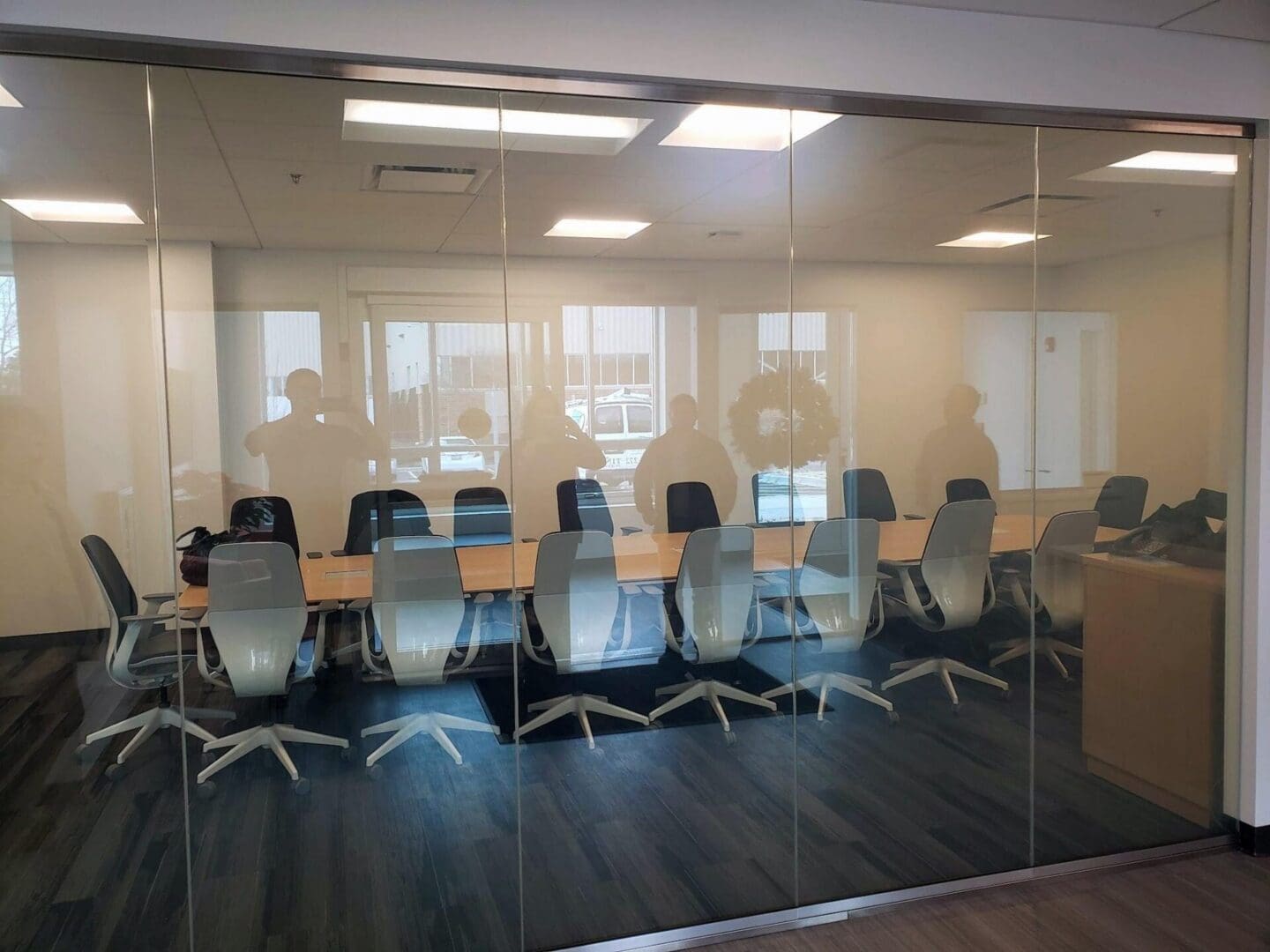
37 Questions Everyone Asks Before Buying Smart Film (Answered by a Manufacturer)
Every day, architects, contractors, designers, homeowners, healthcare facilities, and business owners contact us with questions about Smart Film. Some are researching switchable privacy glass for the first time, while others are comparing manufacturers or planning a large commercial installation.
Although Smart Film has become significantly more common over the past decade, there is still plenty of misinformation online. Some articles oversimplify the technology, while others confuse PDLC Smart Film with electrochromic glass, decorative window films, or automotive tint. As a result, buyers are often left with more questions than answers.
This guide is designed to change that.
Drawing on years of manufacturing and supplying Smart Film throughout North America, we’ve compiled the questions we hear most frequently from architects, glazing contractors, facility managers, homeowners, and commercial property owners. Whether you’re considering Smart Film for a single conference room or specifying hundreds of square feet for a commercial development, these answers will help you make a more informed decision.
Let’s begin with the questions almost every first-time buyer asks.

1. What Is Smart Film?
Smart Film is a switchable privacy film that transforms existing glass from transparent to frosted using electricity. The technology is based on Polymer Dispersed Liquid Crystal (PDLC), where microscopic liquid crystal droplets are suspended within a polymer layer.
When electrical current is applied, the liquid crystals align, allowing light to pass through the film so the glass appears clear. When the power is turned off, the crystals scatter light, creating a uniform frosted appearance that provides privacy while still allowing daylight to enter the room.
Unlike blinds or curtains, Smart Film doesn’t cover the glass—it changes the glass itself.
Today, Smart Film is widely used in:
- Office partitions
- Conference rooms
- Healthcare facilities
- Luxury homes
- Hotels
- Retail storefronts
- Educational institutions
- Government buildings
- Museums
- Showrooms
Its ability to switch instantly between openness and privacy has made it one of the fastest-growing architectural glazing technologies.
2. What’s the Difference Between Smart Film and Smart Glass?
Although the terms are often used interchangeably, they are not exactly the same.
Smart Film is a retrofit solution that is professionally applied to existing glass. It is ideal for renovations, tenant improvements, and projects where replacing glazing would be expensive or impractical.
Smart Glass incorporates the same PDLC technology during the manufacturing of laminated or insulated glass units. Because the privacy layer is built directly into the glass, Smart Glass is typically specified for new construction or premium architectural projects where new glazing is already being fabricated.
Both products deliver the same instant privacy effect. The choice usually depends on whether the project involves existing glass or new glass fabrication.

3. Can Smart Film Be Installed on Existing Glass?
Yes—and this is one of its greatest advantages.
Many people assume switchable privacy technology requires replacing their windows or glass partitions. In reality, professionally installed Smart Film can often be applied directly to existing interior glass surfaces.
This makes it an excellent solution for:
- Existing office buildings
- Commercial renovations
- Tenant improvements
- Healthcare upgrades
- Retail remodels
- Luxury residential renovations
Because the original glass remains in place, installation is generally faster, less disruptive, and more cost-effective than replacing complete glazing systems.
4. How Does Smart Film Work?
The science behind Smart Film is surprisingly elegant.
Inside the film are millions of microscopic liquid crystal droplets.
When electricity is applied:
- The crystals align.
- Light passes through the film.
- The glass appears transparent.
When electricity is removed:
- The crystals scatter randomly.
- Light becomes diffused.
- The glass turns uniformly frosted.
The transition occurs almost instantly and can be repeated countless times throughout the product’s lifespan.
Modern control options include:
- Wall switches
- Remote controls
- Smartphone apps
- Voice assistants
- Motion sensors
- Occupancy sensors
- Timers
- Building automation systems
This flexibility allows Smart Film to integrate seamlessly into both residential and commercial environments.
5. Does Smart Film Provide Complete Privacy?
This is one of the most common questions—and the answer depends on what you mean by “complete privacy.”
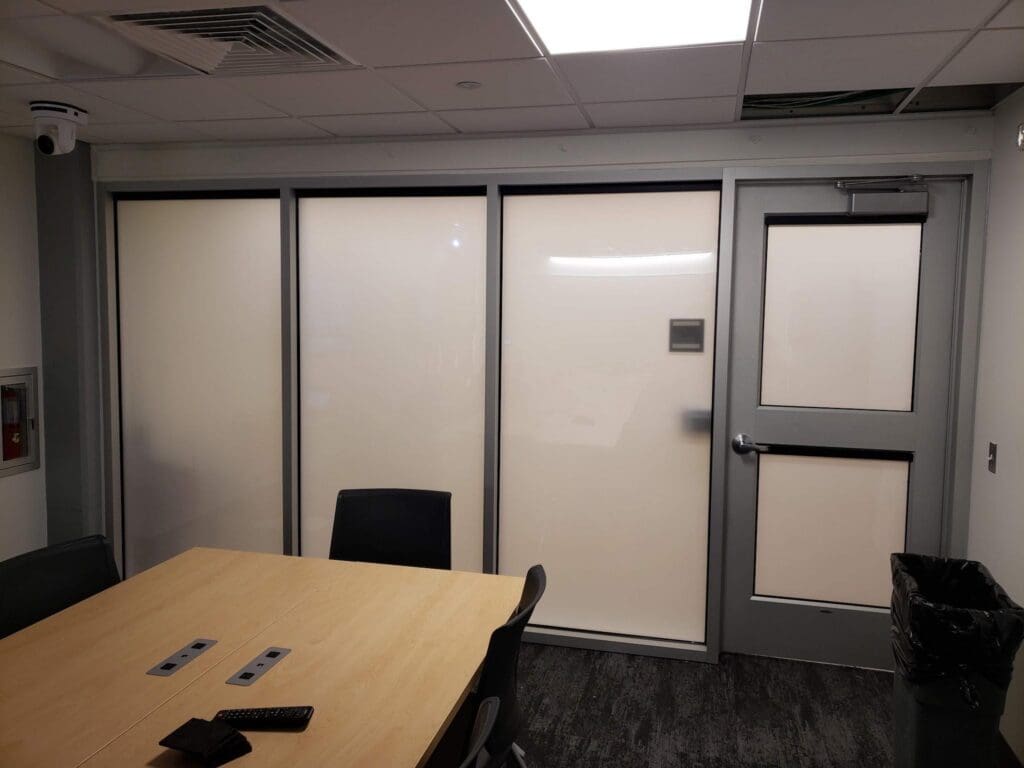
When switched to its frosted state, Smart Film prevents people from seeing through the glass in normal viewing conditions. Shapes, colours, and movement become obscured, making it an excellent solution for meeting rooms, medical spaces, executive offices, bathrooms, and other areas where visual privacy is important.
However, Smart Film is not a blackout product. It is designed to diffuse light rather than eliminate it. Daylight continues to pass through the glass, helping spaces remain bright and welcoming even when privacy is activated.
For projects requiring total light control or blackout performance, architects may consider combining Smart Film with shades or selecting a different glazing technology based on the application’s specific needs.

6. Does Smart Film Block UV Rays?
Most high-quality architectural Smart Film products significantly reduce ultraviolet (UV) radiation.
Reducing UV exposure offers several benefits:
- Helps protect furniture from fading
- Reduces damage to flooring
- Protects artwork
- Preserves fabrics
- Improves occupant comfort
While UV performance varies by manufacturer and product configuration, quality Smart Film systems are commonly selected not only for privacy but also for their ability to enhance interior protection and occupant comfort.
7. Can Smart Film Help Reduce Heat?
Many buyers assume Smart Film functions like traditional solar control window film. While privacy is its primary purpose, some Smart Film systems also contribute to improved solar performance depending on the glass assembly and available coating options.
For buildings where solar heat gain reduction is a primary objective, manufacturers may recommend combining Smart Film with Low-E glass, insulated glazing units, or dedicated solar control films to achieve optimal performance.
The result is a glazing system that balances privacy, daylight, energy efficiency, and occupant comfort.
Why Asking the Right Questions Matters
Every building is different, and every Smart Film project has its own design goals, performance expectations, and technical requirements.
By understanding how the technology works—and where it performs best—architects, contractors, and property owners can make better specification decisions and avoid common misconceptions.
In Part 2, we’ll answer the next group of frequently asked questions, including installation timelines, maintenance requirements, life expectancy, electrical consumption, projection capabilities, cleaning recommendations, and whether Smart Film can be used on exterior windows.
37 Questions Everyone Asks Before Buying Smart Film (Answered by a Manufacturer) – Part 2
In Part 1, we explained what Smart Film is, how it works, and why it has become one of the most popular privacy solutions for commercial and residential glass. Now we’ll answer the questions people usually ask after they’ve decided Smart Film might be the right solution for their project.
Whether you’re planning a single conference room, renovating a luxury home, or specifying Smart Film for a large commercial development, these answers will help you understand what to expect before making your investment.
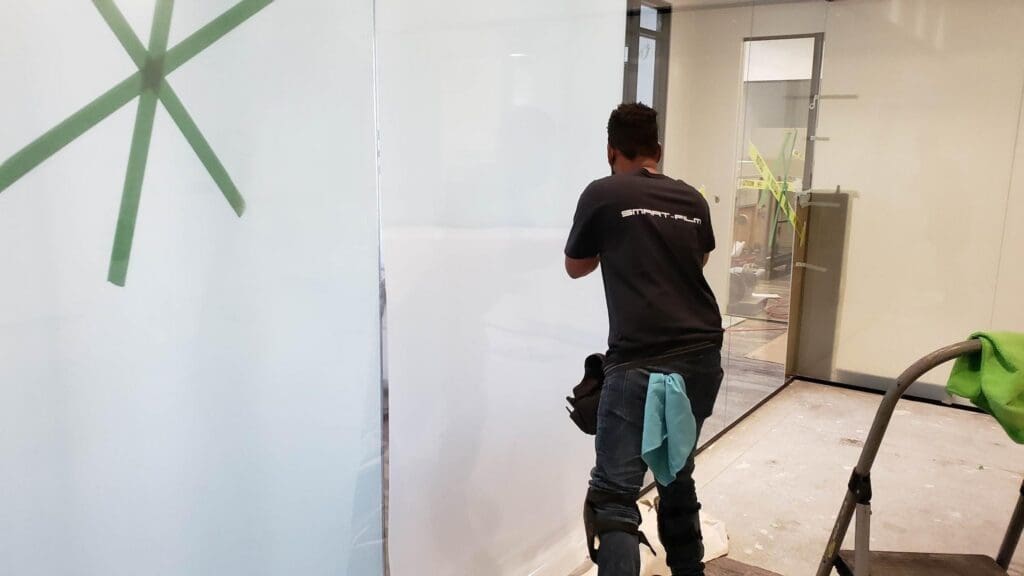
Professional installation ensures proper alignment, electrical connection, and long-term performance.
8. How Long Does Smart Film Last?
One of the first questions buyers ask is about longevity.
High-quality Smart Film is designed for long-term architectural use. Like any electrical building product, its lifespan depends on several factors, including manufacturing quality, installation, environmental conditions, and daily operation.
When professionally installed using quality electrical components and operated within the manufacturer’s specifications, Smart Film is designed to provide many years of reliable performance.
Choosing an experienced manufacturer is important because product quality can vary significantly. Differences in the liquid crystal formulation, conductive coatings, adhesives, wiring methods, and quality control all contribute to long-term durability.
Rather than focusing solely on price, buyers should also consider:
- Manufacturer experience
- Product testing
- Warranty coverage
- Technical support
- Availability of replacement components
- Installation expertise
These factors often have a greater impact on long-term satisfaction than the initial purchase price.
9. Does Smart Film Use a Lot of Electricity?
Surprisingly, no.
Smart Film is designed to operate using low-voltage electrical power and consumes relatively little energy compared to many building systems.
Because electricity is only required while the film is in its transparent state, operating costs remain relatively low for most commercial and residential applications.
Many installations are controlled by timers, occupancy sensors, or automation systems, ensuring the film is only energized when transparency is actually needed.
For facility managers seeking flexible privacy without significant operating costs, Smart Film represents an efficient solution that integrates well with modern building controls.
10. Can Smart Film Be Controlled by a Smartphone?
Yes.
Modern Smart Film systems can be integrated with a wide range of control options depending on the project requirements.
Popular control methods include:
- Wall switches
- Wireless remotes
- Smartphone applications
- Voice assistants
- Smart home systems
- Occupancy sensors
- Timers
- Building Management Systems (BMS)
Commercial facilities often integrate Smart Film into centralized building automation, allowing conference rooms, executive offices, and presentation spaces to operate automatically according to occupancy schedules or programmed events.
Residential homeowners frequently prefer app-based control because it allows privacy to be activated from anywhere inside the home.

11. Can Smart Film Be Used as a Projection Screen?
Absolutely.
One of Smart Film’s lesser-known advantages is that the frosted state creates an excellent rear-projection surface.
This allows a single glass partition to serve multiple purposes throughout the day.
For example:
Morning:
Transparent conference room.
Afternoon:
Private meeting room.
Evening:
Presentation screen.
Applications include:
- Boardrooms
- Training facilities
- Universities
- Museums
- Retail displays
- Hotel conference centres
- Corporate lobbies
- Experience centres
Rather than installing dedicated projection screens, architects can maximize the functionality of existing glass surfaces.
12. Is Smart Film Difficult to Clean?
Not at all.
Cleaning procedures are very similar to standard architectural glass.
Most manufacturers recommend:
- Soft microfiber cloths
- Non-abrasive glass cleaners
- Gentle cleaning motions
- Avoiding razor blades or abrasive pads
- Following manufacturer cleaning guidelines
Routine maintenance helps preserve the film’s appearance while protecting the electrical connections located along the film’s edge.
Proper installation also minimizes exposed components, allowing Smart Film to blend seamlessly into the surrounding glazing.
13. Can Smart Film Be Installed Outdoors?
This question creates a great deal of confusion.
Most retrofit Smart Film products are intended for interior applications, where they are protected from direct weather exposure.
Exterior installations typically require specially engineered glazing systems, laminated Smart Glass, or insulated glass units designed specifically for outdoor conditions.
The correct solution depends on:
- Climate
- Building orientation
- Glass construction
- Moisture exposure
- Structural design
Consulting the manufacturer early in the design process helps determine the most appropriate product for exterior projects.

14. Can Smart Film Be Cut After Installation?
No.
Smart Film is custom manufactured to fit each piece of glass before installation.
Once fabricated and electrically connected, it should not be trimmed or modified on-site.
During the planning stage, manufacturers typically request detailed measurements and fabrication drawings to ensure each panel is produced accurately.
This precision helps create:
- Cleaner finished edges
- Proper electrical alignment
- Improved aesthetics
- Reliable long-term performance
Professional measuring and fabrication are especially important for curved glass, custom shapes, oversized panels, and complex commercial installations.
15. Does Smart Film Change the Appearance of Glass?
In its transparent state, Smart Film maintains a clean, modern appearance that complements contemporary architecture.
When switched off, the glass transitions to an elegant frosted finish that provides privacy while still transmitting natural daylight.
Architects often prefer this look over traditional blinds because it preserves:
- Open sightlines
- Minimalist interiors
- Uniform glazing appearance
- Daylight penetration
- Contemporary aesthetics
The transformation occurs almost instantly, making the technology both practical and visually impressive.
16. Is Smart Film Suitable for Homes?
Absolutely.
Although many people first encounter Smart Film in commercial offices, residential demand continues to grow every year.
Popular residential applications include:
- Ensuite bathrooms
- Home offices
- Glass showers
- Entry doors
- Stair railings
- Wine cellars
- Home gyms
- Entertainment rooms
- Pool houses
- Interior partitions
Homeowners appreciate having privacy exactly when they want it without permanently blocking beautiful architectural glass.
17. Is Smart Film Worth the Investment?
The answer depends on your priorities.
If you’re simply looking for the least expensive way to cover a window, traditional blinds may satisfy that need.
However, if your goals include:
- Flexible privacy
- Modern architecture
- Increased functionality
- Cleaner interiors
- Premium aesthetics
- Improved user experience
- Long-term adaptability
then Smart Film offers value that extends far beyond its initial installation cost.
Many commercial clients view Smart Film as an investment in the building’s flexibility, while homeowners often consider it a premium architectural feature that enhances both everyday living and overall property appeal.
The Importance of Choosing the Right Manufacturer
Although Smart Film technology has become increasingly available worldwide, not all manufacturers produce the same level of quality.
Differences in materials, quality control, electrical components, technical support, warranties, and manufacturing experience can significantly influence performance over the life of the installation.
Before making a decision, buyers should compare more than just specifications—they should also evaluate the manufacturer’s reputation, support network, certifications, customization capabilities, and experience with projects similar to their own.
In Part 3, we’ll answer the final group of frequently asked questions, including warranty considerations, installation timelines, commercial specifications, integration with smart buildings, common buying mistakes, and practical advice for selecting the best Smart Film solution for your project.
37 Questions Everyone Asks Before Buying Smart Film (Answered by a Manufacturer) – Part 3
In the first two parts of this guide, we covered the fundamentals of Smart Film, how it works, installation considerations, energy consumption, maintenance, and the most common questions buyers ask before making a purchase.
In this final section, we’ll answer the remaining questions that architects, facility managers, homeowners, and contractors frequently ask before selecting a manufacturer. These questions often determine whether a project runs smoothly and whether the finished installation delivers years of reliable performance.

18. What Happens During a Power Outage?
One of the most frequently misunderstood aspects of PDLC Smart Film is how it behaves when power is interrupted.
Standard Smart Film is designed to be clear when powered and private when power is removed.
That means if a building experiences a power outage, the film automatically returns to its frosted privacy state.
For many applications—including healthcare, executive offices, financial institutions, and conference rooms—this “privacy by default” design is actually considered an advantage because confidential spaces remain private even when electrical service is interrupted.
19. Can Smart Film Be Removed?
Yes.
Professionally installed Smart Film can generally be removed if a building is renovated or the glass is being replaced.
Removal methods vary depending on the installation and adhesive system used, so it is always recommended that removal be performed by experienced technicians.
If the existing glass remains in good condition, a new Smart Film system can often be installed after proper surface preparation.
20. Does Smart Film Reduce Glare?
Yes.
Although Smart Film is primarily designed for privacy rather than solar control, the frosted mode naturally diffuses incoming light.
Many users notice reduced glare on:
- Computer monitors
- Interactive displays
- Presentation screens
- Televisions
- Digital signage
For projects where glare reduction is a primary objective, architects may also combine Smart Film with Low-E glass or solar control glazing to achieve the desired balance of daylight, comfort, and energy performance.

21. Can Smart Film Be Installed on Curved Glass?
It depends on the radius of the glass and the specific application.
Many architectural projects incorporate curved glazing, custom entrances, or decorative glass features.
Whether Smart Film is suitable depends on factors such as:
- Glass dimensions
- Radius of curvature
- Wiring requirements
- Installation access
- Project environment
Early consultation with the manufacturer helps determine whether a custom solution is available.
22. Can Smart Film Increase Property Value?
While every property is different, Smart Film is widely considered a premium architectural feature.
For commercial buildings, it can improve:
- Workplace flexibility
- Tenant appeal
- Modern aesthetics
- Meeting room functionality
- Visitor experience
For luxury homes, Smart Film adds convenience, privacy, and a level of technological sophistication that many buyers associate with high-end design.
Although it should not be viewed solely as an investment vehicle, many owners appreciate the additional functionality and modern appeal it brings to a property.
23. Is Smart Film Safe?
Yes.
When professionally manufactured and installed using appropriate electrical components, Smart Film operates using low-voltage electrical power and is designed for everyday architectural use.
As with any electrical building product, installation should always follow the manufacturer’s recommendations and applicable electrical codes(opens in new tab).
Working with experienced installers helps ensure the system performs safely and reliably for many years.
24. Can Smart Film Be Used in Wet Areas?
Yes, provided the installation is designed appropriately.
Common wet-area applications include:
- Ensuite bathrooms
- Spa treatment rooms
- Wellness centres
- Shower enclosures (where appropriate)
- Pool houses
Moisture protection, edge sealing, and proper electrical planning are particularly important in these environments, making manufacturer guidance essential during design and installation.

25. How Long Does Installation Take?
Installation time depends on several factors, including:
- Number of glass panels
- Glass size
- Site access
- Electrical preparation
- Control system integration
A single conference room may be completed relatively quickly, while larger commercial projects involving multiple floors or custom glazing systems require more extensive planning.
The best way to minimize installation time is to coordinate electrical work and glazing preparation before installation begins.
26. What Maintenance Is Required?
One of the advantages of Smart Film is its low maintenance requirements.
Most installations require little more than routine glass cleaning using approved cleaning products and soft, non-abrasive cloths.
Periodic inspections of electrical connections and control equipment may also be recommended for large commercial installations as part of a building’s preventative maintenance program.
Unlike blinds or curtains, there are no slats, cords, or fabric components that require regular replacement or deep cleaning.
27. What Should I Ask Before Choosing a Smart Film Manufacturer?
Selecting the right manufacturer is just as important as selecting the right product.
Before making a decision, ask questions such as:
- How long have you manufactured Smart Film?
- Do you provide technical support?
- Are products custom fabricated?
- Can you supply projects throughout North America?
- What control systems are available?
- What warranty is included?
- Do you offer installation training?
- Can replacement components be supplied years later?
- Do you provide specification assistance for architects?
- Can you support both commercial and residential projects?
These conversations often reveal the difference between a supplier that simply sells products and a manufacturer that supports projects from concept through completion.
28. What Are the Most Common Buying Mistakes?
After working with thousands of projects, several patterns appear repeatedly.
The most common mistakes include:
- Comparing products by price alone
- Ignoring long-term technical support
- Failing to coordinate electrical planning early
- Choosing a supplier without installation experience
- Not verifying product testing or certifications
- Assuming all Smart Film products perform identically
Investing time in planning often saves considerably more time and money during installation.
29. Is Smart Film Right for My Project?
If your project requires instant privacy, clean architectural design, flexible spaces, and unobstructed daylight, Smart Film is worth serious consideration.
It has become a trusted solution for:
- Corporate offices
- Healthcare facilities
- Hotels
- Educational institutions
- Government buildings
- Retail environments
- Luxury residences
- Museums
- Showrooms
- Restaurants
Because every project is unique, consulting with an experienced manufacturer early in the design process helps identify the most suitable solution while avoiding unnecessary changes later.
Final Thoughts
Smart Film is no longer considered an emerging technology. It has become an established architectural solution that enables buildings to be more adaptable, functional, and visually refined.
From conference rooms that instantly become private to luxury homes that preserve open-concept living without sacrificing comfort, Smart Film offers a unique combination of technology and design flexibility.
Like any premium architectural product, long-term performance depends on thoughtful planning, quality manufacturing, professional installation, and ongoing technical support.
Taking the time to ask the right questions—and working with an experienced manufacturer—helps ensure your investment continues to perform for years to come.
Continue Your Smart Film Research
If you’re still exploring switchable privacy technology, these resources can help you dive deeper:
- Smart Film Overview – Learn how retrofit Smart Film upgrades existing glass without replacement.
- Smart Glass Solutions – Explore insulated and laminated Smart Glass options for new construction.
- Commercial Applications – Discover how Smart Film enhances offices, healthcare facilities, hotels, schools, and retail spaces.
- Residential Applications – See how homeowners are using Smart Film in bathrooms, home offices, wine rooms, and modern living spaces.
- Installation Guide – Understand the installation process, electrical requirements, and project planning.
- Smart Film vs. Smart Glass – Compare the advantages of each solution to determine which is best for your project.
- Frequently Asked Questions – Find additional answers covering performance, controls, maintenance, and product selection.
About Smart Film Inc.
For more than a decade, Smart Film Inc. has been helping architects, contractors, designers, and property owners throughout North America transform ordinary glass into intelligent, switchable privacy solutions. From custom residential projects to large-scale commercial developments, our team provides technical guidance, precision manufacturing, and project support to help ensure every installation meets the highest standards of performance and design.
Whether you’re planning a new building, renovating an existing space, or simply researching the latest in architectural glass technology, understanding how Smart Film works—and choosing the right manufacturing partner—are the first steps toward creating spaces that are as flexible as they are beautiful.