
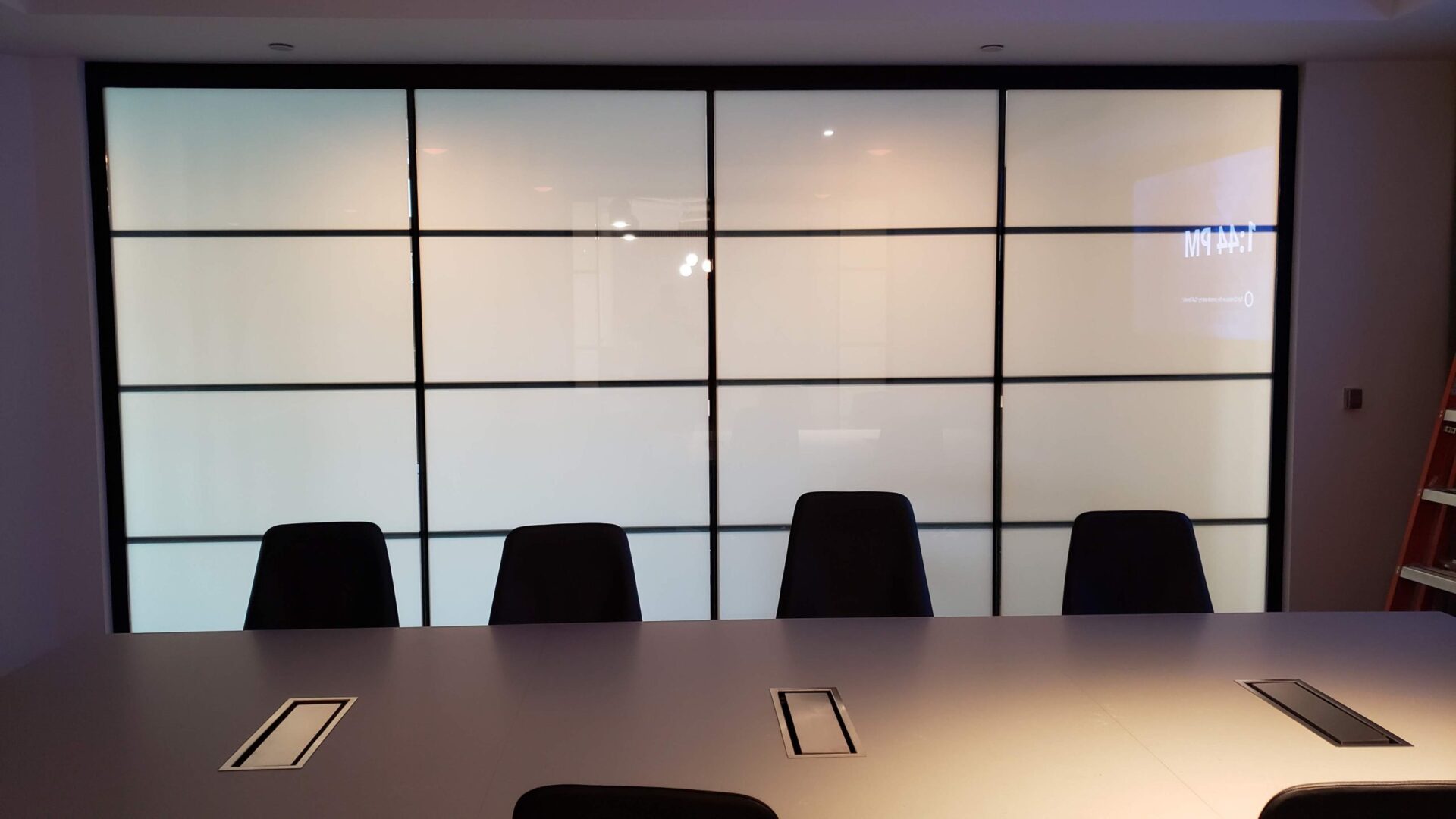
What Is Smart Film and How Does It Work?
Glass has always been one of the most beautiful elements in architecture. It allows natural light to flow through spaces, creates openness, and makes rooms feel larger and more connected.
But glass has always come with one major challenge:
Privacy.
For decades, the solution has been curtains, blinds, shades, or frosted glass. While these options provide privacy, they also block natural light and interrupt modern design aesthetics.
Enter Smart Film, a revolutionary technology that allows glass to switch from clear to private instantly.
With the flip of a switch, voice command, or smartphone app, Smart Film transforms ordinary glass into dynamic privacy glass. It’s one of the fastest-growing technologies in architecture, home design, and commercial interiors.
In this guide, we’ll explain:
- What Smart Film is
- How Smart Film works
- Where Smart Film is used
- Why architects and designers are adopting it
- How it compares to traditional privacy solutions
What Is Smart Film?
Smart Film is a switchable privacy film that can be applied to glass surfaces to control transparency.
When powered on, the film becomes clear and transparent.
When the power is turned off, the glass becomes opaque or frosted, providing privacy.
The transformation happens in less than a second.
Smart Film is typically installed onto existing glass, making it a popular choice for renovations and retrofits where replacing entire glass panels would be expensive or impractical.
It can be installed on:
- Residential windows
- Bathroom glass
- Office boardrooms
- Glass partitions
- Retail storefronts
- Skylights
- Patio doors
- Conference rooms
Because the film can be applied directly to existing glass, it offers a cost-effective way to upgrade traditional windows into smart glass technology.
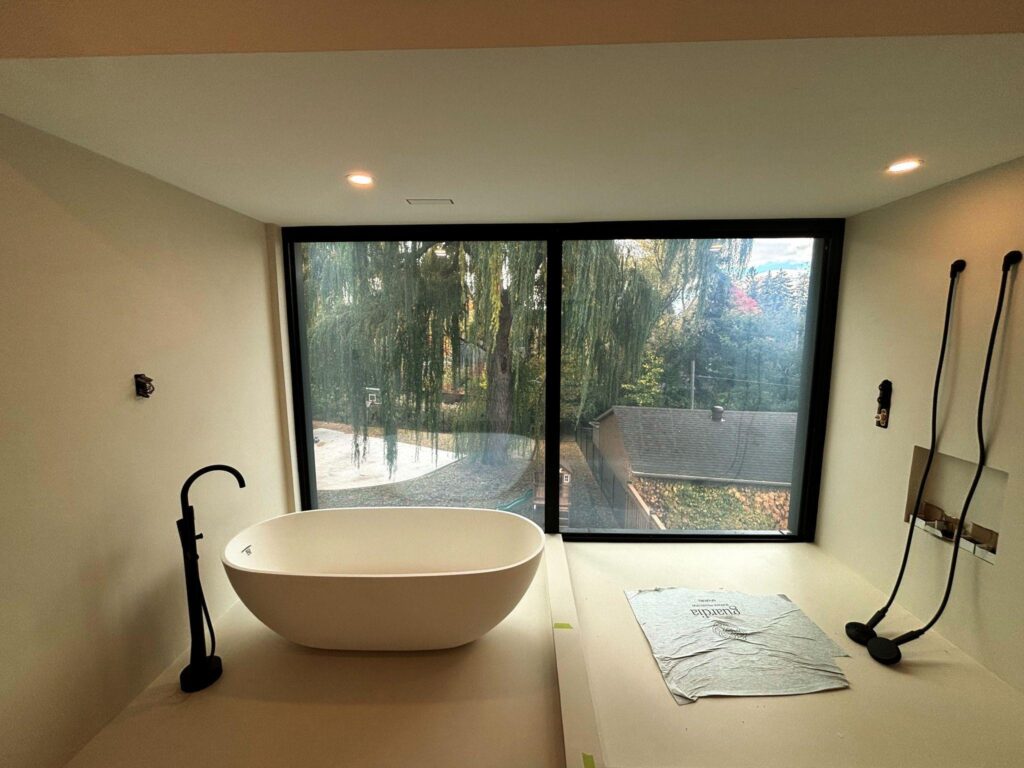
Smart Film allows glass to change from transparent to private instantly.
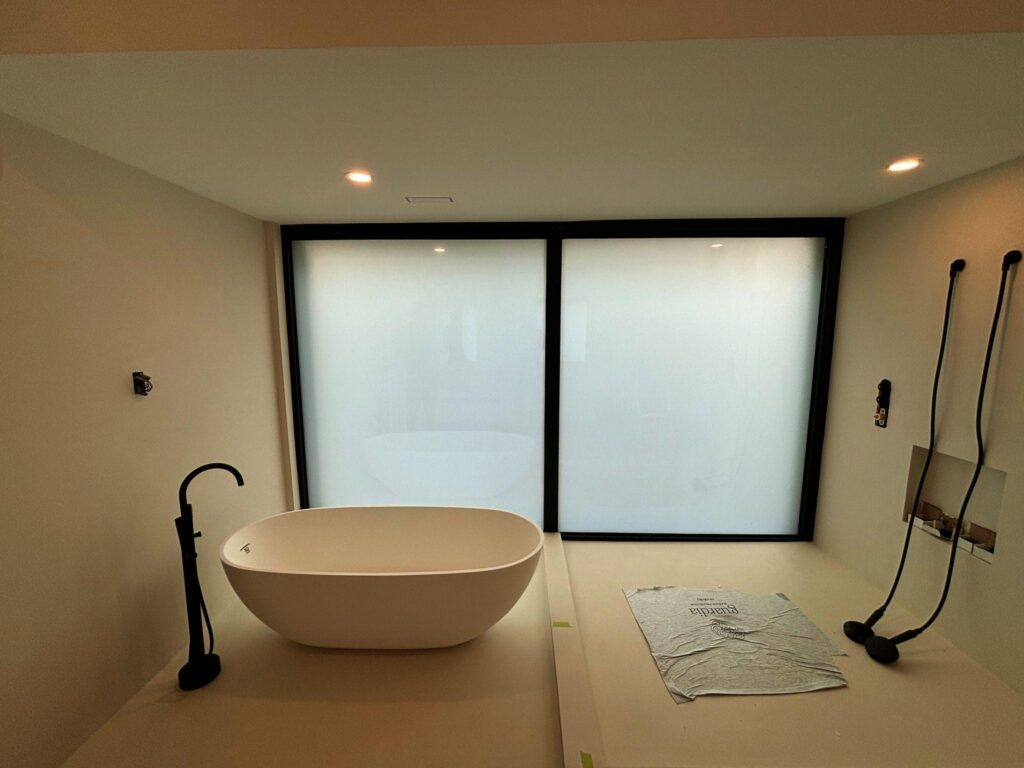
Smart Film allows glass to change from transparent to private instantly.
How Does Smart Film Work?
Smart Film works using PDLC technology, which stands for Polymer Dispersed Liquid Crystal.
Although the name sounds complex, the principle behind it is quite straightforward.
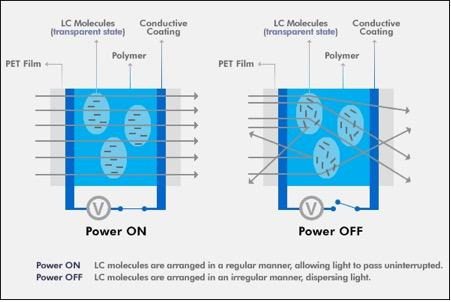
Inside the film are millions of microscopic liquid crystal droplets suspended in a polymer matrix. These crystals respond to electrical current.
Their orientation determines whether light passes through the glass or is scattered.
Smart Film When the Power Is OFF
When no electrical current is applied:
- The liquid crystals are randomly scattered
- Light passing through the film is diffused
- The glass appears frosted or opaque
This scattered light effect blocks visibility while still allowing natural light to pass through.
The result is instant privacy without darkness.
Smart Film When the Power Is ON
When electrical current is applied:
- The liquid crystals align in the same direction
- Light passes through the film
- The glass becomes clear and transparent
This transition occurs almost instantly, typically in milliseconds.
This is why Smart Film is often referred to as switchable privacy glass.
What Powers Smart Film?
Smart Film requires low voltage electricity to operate.
Most systems use a small power supply connected to the film through discreet wiring.
Common control options include:
- Wall switches
- Remote controls
- Smartphone apps
- Voice assistants
- Smart home automation systems
Many modern installations integrate Smart Film with platforms such as:
- Home automation systems
- Office automation controls
- Smart lighting systems
- Security and privacy systems
Emerging technologies are even enabling wireless smart film powered by solar energy, which simplifies installation dramatically.
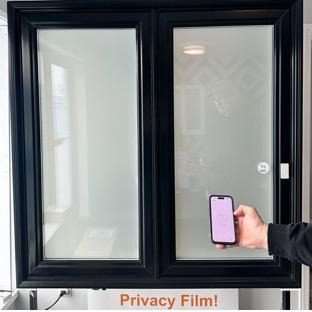
Smart Film can be controlled by switches, remotes, or smart home systems.
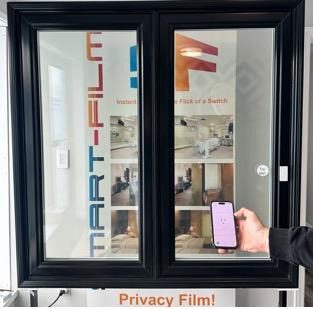
Smart Film can be controlled by switches, remotes, or smart home systems.
Where Is Smart Film Used?
Smart Film is extremely versatile and can be used in residential, commercial, and institutional environments.
Because it maintains a clean, modern aesthetic, it has become popular with architects, designers, and developers.
Residential Applications
In homes, Smart Film is often used to replace traditional window coverings like blinds or curtains.
Popular residential uses include:
- Bathroom privacy windows
- Shower enclosures
- Front entry doors
- Patio doors
- Skylights
- Large architectural windows
- Home offices
Instead of installing blinds that block natural light, homeowners can simply switch the glass to privacy mode whenever needed.
Commercial Applications
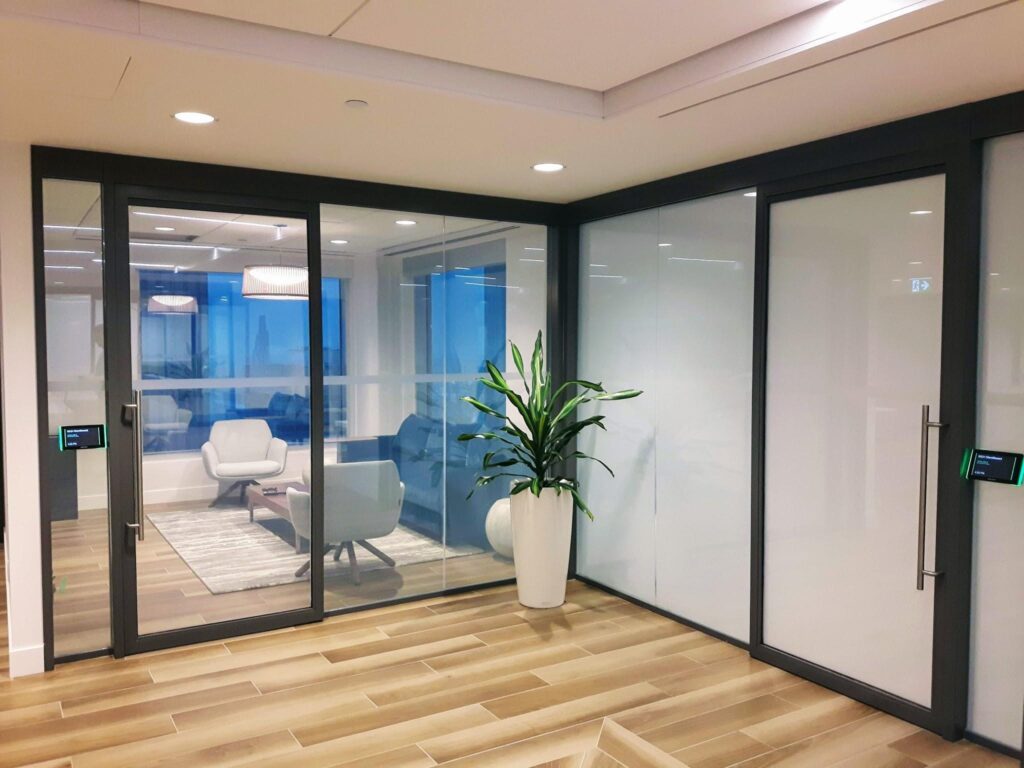
Commercial spaces benefit from Smart Film because it allows rooms to adapt instantly to different uses.
Common commercial applications include:
- Office boardrooms
- Glass office partitions
- Hotel bathrooms
- Medical clinics
- Conference rooms
- Retail storefronts
- Airports and transportation hubs
For example, a conference room can switch from transparent to private instantly during meetings.
Key Benefits of Smart Film
Smart Film offers several advantages compared to traditional window treatments and frosted glass.
Instant Privacy
Switch glass from transparent to opaque in seconds.
Modern Architectural Design
Smart Film eliminates bulky blinds and curtains, creating a minimalist aesthetic preferred by architects.
Energy Efficiency
Smart Film can help reduce glare and solar heat gain, contributing to improved energy efficiency.
Multi-Purpose Glass
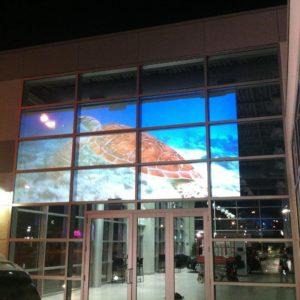
When in frosted mode, Smart Film can double as a rear projection screen, making it useful for:
- Presentations
- Advertising displays
- Home theaters
Smart Film vs Smart Glass
Although people often use the terms interchangeably, Smart Film and Smart Glass are slightly different technologies.
| Feature | Smart Film | Smart Glass |
| Installation | Applied to existing glass | Manufactured inside glass panels |
| Retrofit Friendly | Yes | No |
| Cost | Lower | Higher |
| Replacement | Easy | Requires glass replacement |
For renovations and retrofits, Smart Film is typically the preferred solution.
Is Smart Film the Future of Privacy Glass?
The demand for smart building technology is growing rapidly.
Architects and developers increasingly want solutions that provide:
- Flexibility
- Energy efficiency
- Privacy
- Modern aesthetics
Smart Film delivers all of these benefits while maintaining the beauty of natural light.
As smart homes and smart offices continue to evolve, switchable glass technology is expected to become a standard feature in modern architecture.
Final Thoughts
Smart Film is changing the way we think about glass.
Instead of choosing between natural light and privacy, modern buildings can now have both.
With a simple electrical signal, glass surfaces become dynamic architectural elements that adapt to the needs of the space.
For homeowners, businesses, and designers alike, Smart Film represents a new generation of smart building technology that blends functionality, privacy, and modern design.